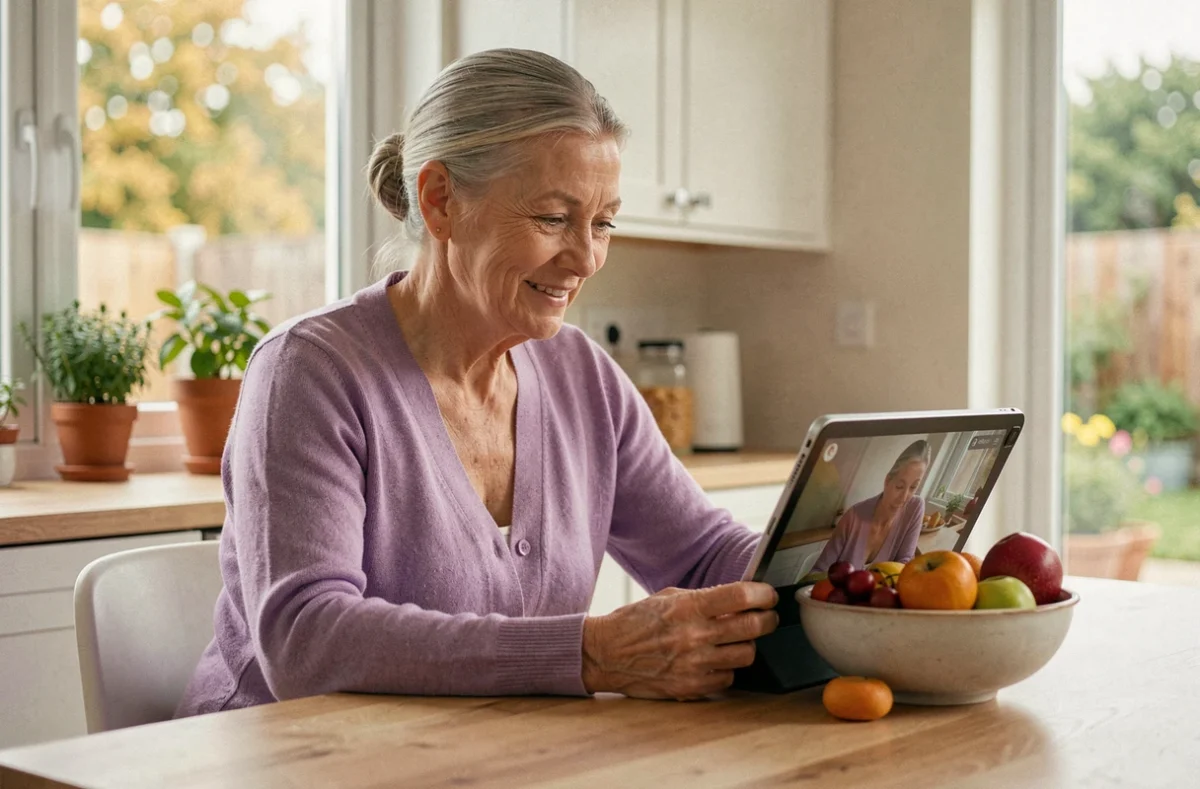
Services for seniors encompass all the services that allow an elderly person to continue living at home in safety and comfort adapted to their situation. Human assistance, meal delivery, tele-assistance, paramedical care, or accompanied transport: each category meets a specific need, often combinable with others.
Respite for caregivers: a service often forgotten in the equation
Most guides on services for seniors focus on the elderly person themselves. However, support for family caregivers remains a critical link in maintaining home care.
According to DREES, one in three caregivers expresses a need for respite, and this need is not met for half of those who declare it. When the caregiver becomes exhausted, the entire home care system falters: emergency hospitalization, rushed entry into a facility, breakdown of social ties.
Respite solutions take various forms. Temporary accommodation in independent living allows the senior to be entrusted for a few days or weeks. Home support, provided by a professional, takes over daily tasks during the caregiver’s absence. Some departmental platforms also offer dedicated psychological support for caregivers, in the form of support groups or individual interviews.
To identify the most suitable option for each situation, the services available on Happy Seniors allow for comparing home care, respite, and support options in one space.
Home assistance and paramedical care: distinguishing the two circuits
Confusing home assistance with home care is common, but the two circuits operate distinctly from an administrative and financial perspective.
Home assistance for daily tasks
Home assistance covers non-medical tasks: cleaning, shopping, meal preparation, non-technical personal care, and accompanying outings. It is partially funded by the personalized autonomy allowance (APA) for individuals classified in GIR 1 to 4, or by pension funds for more independent seniors.
A point of caution: according to preliminary results from DREES, departmental social assistance for home care aimed at the elderly decreased in 2025, for the first time since 2020. This trend does not mean that the availability of services has decreased everywhere, but it invites verification of the allocation conditions with one’s department.
Nursing and paramedical care at home
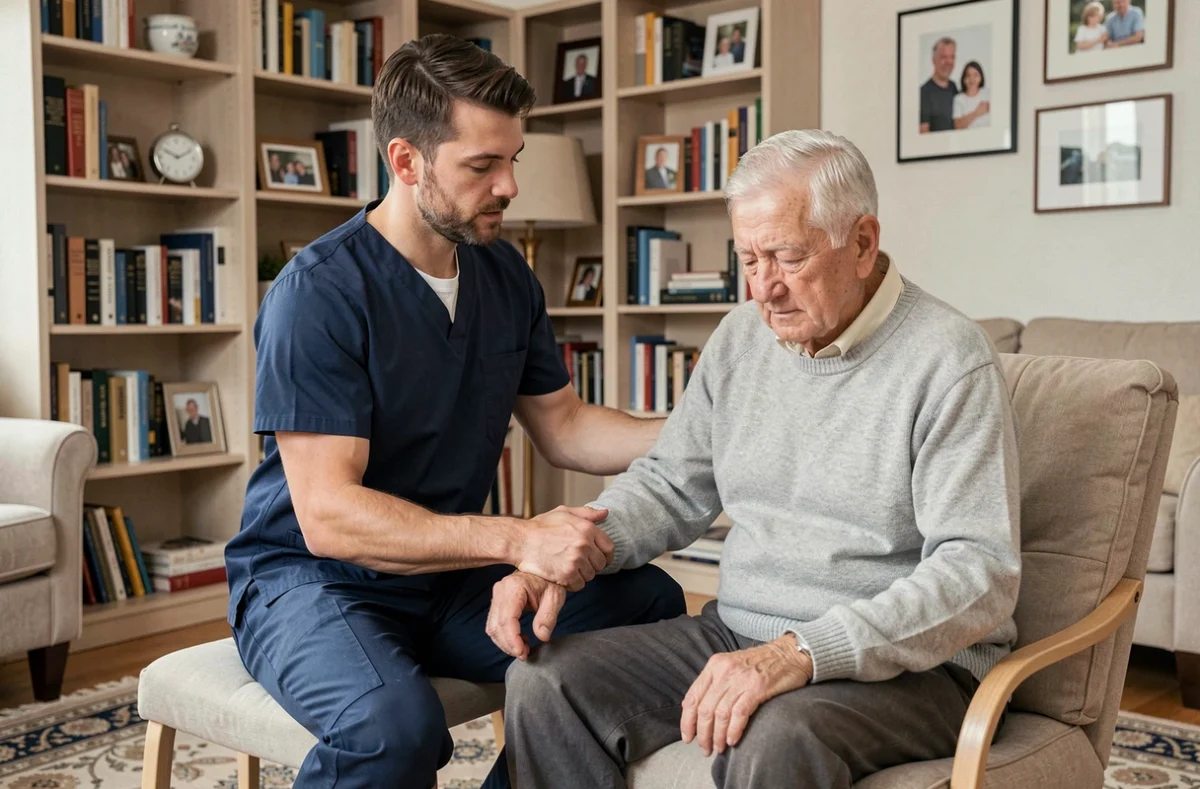
Home care falls under the medical circuit. It is prescribed by a doctor and covered by health insurance. SSIAD (home nursing services) intervene for dressings, injections, treatment monitoring, or pressure sore prevention.
The two types of services complement each other but do not substitute for one another. A senior receiving daily nursing visits for an injectable treatment will often need, in parallel, a home helper several hours a week.
Meal delivery and nutritional safety for seniors
Malnutrition is an underestimated risk among elderly people living alone. Home meal delivery addresses this issue concretely by providing balanced meals adapted to specific diets (low salt, modified texture, diabetic).
This service is generally offered by municipal social action centers (CCAS) or private providers. The cost varies by municipality, and partial coverage by the APA or departmental social assistance is possible under certain income conditions.
- Meals delivered daily or several times a week, at a fixed time, which also structures the senior’s day
- Menus approved by a dietitian, with adaptations for common pathologies (diabetes, kidney failure, swallowing disorders)
- The delivery person’s visit constitutes regular human contact and can serve as a warning signal in case of problems
Tele-assistance and housing adaptation: securing without altering
Tele-assistance is based on a simple principle: a connected device or bracelet allows the senior to trigger an alert in case of a fall or malaise. An operator contacts them, assesses the situation, and, if necessary, sends help or alerts a designated relative.
Recent models include automatic fall detection, which covers situations where the person cannot press the button. Some devices add a connected smoke detector or an activity sensor that alerts in case of prolonged absence of movement.
Housing adaptation complements this security. It includes targeted interventions:
- Installation of grab bars in the bathroom and toilet
- Replacing the bathtub with a walk-in shower
- Installing motorized roller shutters to eliminate efforts at height
- Automatic lighting in hallways and staircases to limit the risk of nighttime falls
Financial assistance exists for these works, notably through the APA, MaPrimeAdapt’, or assistance from pension funds. Conditions vary by department and household resources.
Intermediate housing: an option between home and facility
For seniors who no longer wish to live alone but refuse entry into a nursing home, independent living residences represent a structured alternative. These individual accommodations, located within a collective setting, offer shared services: dining, activities, presence of a caretaker or night watchman.
The CNSA and the Retirement Insurance launched in 2026 a new edition of the Initiative for the development of independent living residences, mobilizing 30 million euros to support the creation or extension of these structures. This public support confirms that intermediate housing occupies an increasing place in the range of solutions for aging at home.
The choice of one service over another depends on the degree of autonomy, available support, and budget. Combining several devices, such as home assistance, tele-assistance, and meal delivery, often allows for significantly delaying the moment when collective accommodation becomes the only viable option.