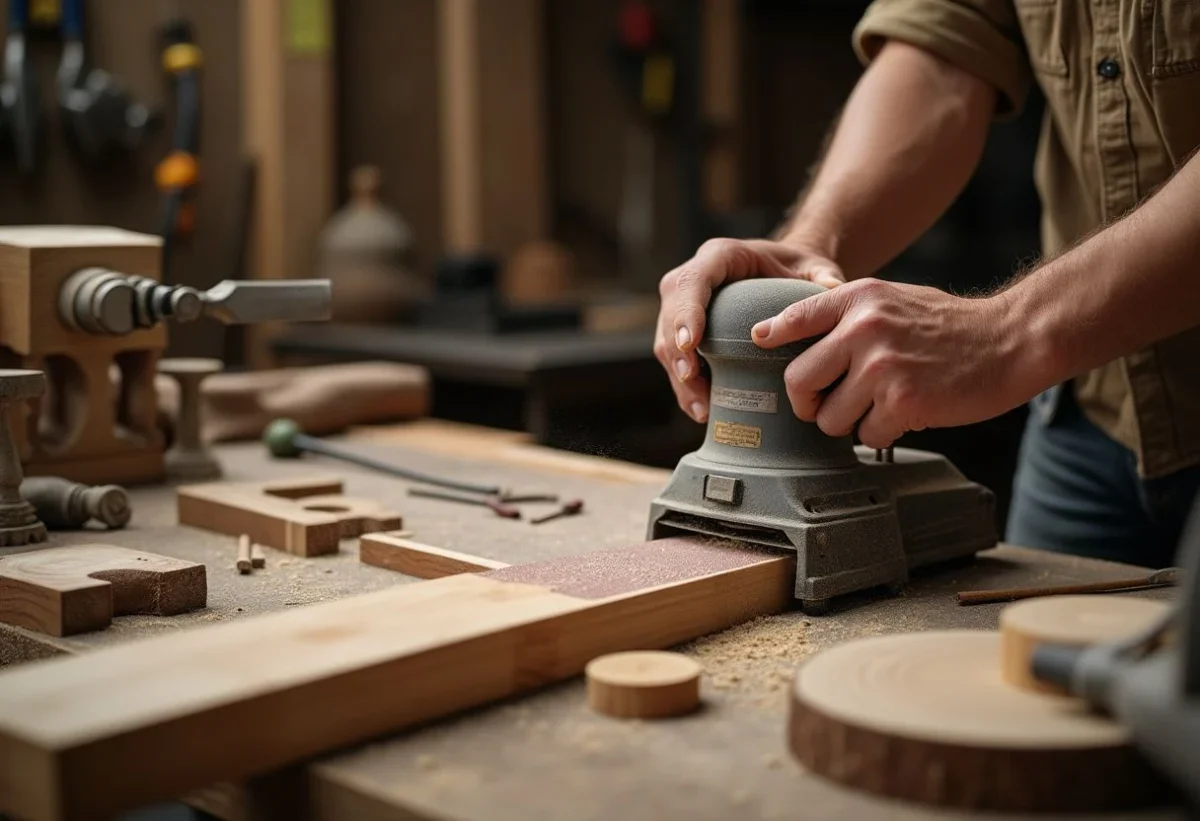
The world of work tools and accessories is vast and varied, but few combine efficiency, versatility, and simplicity. The abrasive belt embodies this triptych with disconcerting ease. It is indispensable in many sectors, ranging from woodworking to mechanics, including metallurgy and composite material work.
What is an abrasive belt?
The abrasive belt is much more than just a strip of rough material. It is the result of precise engineering that integrates various components to adapt to specific tasks. Depending on the type of work to be done, it comes in different grits and materials, thus offering tailored solutions for each application.
- Grit: The grit of an abrasive belt determines its ability to remove more or less material. Coarser grains are used for roughing tasks, while finer grains are perfect for delicate finishing.
- Materials: Abrasive belts can be made from various materials, such as aluminum oxide, silicon carbide, or zirconium. Each of these materials has unique properties that influence the durability and effectiveness of the belt.
- Backing: The backing of the belt can be made of paper, cloth, or synthetic fibers. The choice of backing depends on the flexibility required for the task at hand and the desired durability.
Applications and uses of the abrasive belt
The applications of the abrasive belt are as varied as the industries that use it. It is an essential tool for many professionals seeking to achieve a perfect finish on their materials.
In the field of woodworking, for example, an abrasive belt is used to sand wooden surfaces, remove imperfections, and prepare furniture for painting or varnishing. This same tool finds its place in metallurgy, where it is used to smooth sharp edges or polish complex metal surfaces.
Mechanics is no exception, as the abrasive belt allows for refining machined parts, ensuring their perfect fit in assemblies.
Finally, in the composite materials sector, it is essential for adjusting contours while preserving the integrity of the materials.
Advantages and disadvantages of abrasive belts
Like any tool, the abrasive belt has its strengths but also its limitations, which are important to consider to make the most of it.
The main advantages include:
- Its versatility: Suitable for a wide range of materials.
- Its efficiency: Reduces working time due to its ability to quickly remove material.
- Its cost: Relatively economical compared to other finishing solutions.
However, it has some disadvantages:
- Its durability: Can wear out quickly if misused or used on inappropriate materials.
- The risk of overheating: Can generate excessive heat, damaging the work surface.
Choosing and maintaining an abrasive belt
Choosing and maintaining an abrasive belt are essential steps to maximize its efficiency and lifespan. Several factors should be considered when purchasing an abrasive belt to ensure it is suitable for your project.
Selection criteria:
- Type of material: Select a belt that matches the material you are working with, whether it is wood, metal, or plastic.
- Grit: Choose the right grain size based on the desired finish and the amount of material to be removed.
- Working environment: Ensure that the belt is compatible with the conditions of your workshop, particularly in terms of resistance to moisture or heat.
Maintenance tips:
- After each use, clean the belt to remove residues and dust that can affect its performance.
- Regularly inspect the belt for any wear or tear that could impair its effectiveness.
- Store your abrasive belts in a dry environment and away from direct sunlight to extend their lifespan.