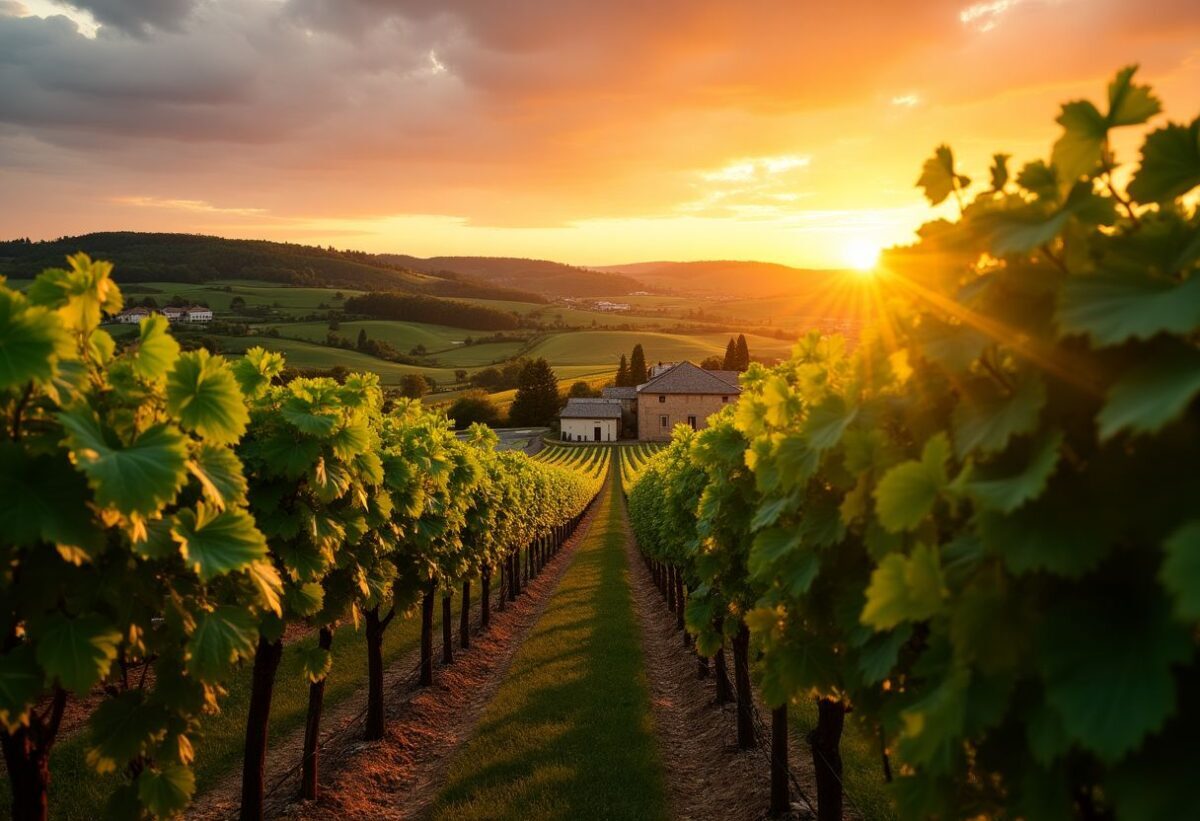
Burgundy, a prestigious wine region in the northeast of France, evokes images of rolling hills covered with lush vines and centuries-old cellars brimming with precious bottles. This land, blessed with a unique climate and varied geology, is the birthplace of a red wine of unparalleled purity and elegance. With a diversity that reflects the rich cultural and historical heritage of the region, Burgundy wine embodies a legacy of passion and craftsmanship.
Each bottle opens a window to a world of sensations, where the terroirs reveal themselves through subtle flavors and enchanting aromas.
Exceptional Terroirs
The magic of Burgundy red wine lies in its terroirs, these micro-regions where the characteristics of soil, climate, and altitude combine to give birth to unique crus. These terroirs are the very essence of the diversity and complexity of these wines.
- Côte de Nuits: Located to the north of Côte d’Or, this area is renowned for its powerful and deep wines. Appellations such as Gevrey-Chambertin, Vosne-Romanée, and Chambolle-Musigny offer a palette of flavors that blend notes of dark fruits and subtle spices.
- Côte de Beaune: Further south, this region is distinguished by wines with more delicate and floral aromas. Pommard, Volnay, and Aloxe-Corton are examples of appellations where Pinot Noir expresses itself with finesse.
- Côte Chalonnaise: Less known but equally fascinating, it produces accessible and elegant wines, such as those from Mercurey and Givry.
The Grape Varieties of Burgundy Wine
The red wines of Burgundy owe much of their distinctive character to the Pinot Noir grape variety, which is the only grape used for these wines. This capricious and delicate variety is a faithful mirror of the terroir where it is cultivated.
The adaptation of Pinot Noir to the limestone soils of Burgundy is perfect, allowing the wines to develop complex aromas of cherry, raspberry, and sometimes underbrush. The subtlety and lightness of Pinot Noir contrast with the more pronounced tannins of other grape varieties, making these wines elegant and refined.
It is interesting to note that, although Pinot Noir is the only red grape variety, each appellation manages to express a unique identity, influenced by the specific location of the vineyard and the traditional winemaking methods employed by the winemaker.
Food and Wine Pairings
One of the great joys of tasting Burgundy red wine lies in its ability to enhance a wide range of dishes. The marriage between food and wine is a harmonious dance, where each element enhances the other.
- Game and Poultry: Game dishes, such as duck or venison, find their ideal partners in the crus of Côte de Nuits, which add depth and complexity to the intense flavors of the meat.
- Aged Cheeses: An Époisses or a Brillat-Savarin pairs wonderfully with a Burgundy red, the creamy flavors of the cheese being balanced by the acidity and tannins of the wine.
- Vegetarian Dishes: Root vegetable stews and mushroom-based dishes benefit from the elegance of a wine from Côte Chalonnaise, which highlights the textures and nuances of the ingredients.
Winemaking: An Ancient Art
The production of Burgundy red wine relies on meticulous craftsmanship, passed down from generation to generation. Each step of the winemaking process is carried out with care to preserve the quality and authenticity of the wine.
The harvest, often manual, is a crucial moment where the best grapes are selected. Fermentation then takes place in open tanks, allowing the aromas to fully develop. Aging the wines in oak barrels is a common practice, adding woody notes and additional structure to the wine.
Finally, bottling is done with particular attention to ensure that the wine, once served, offers an unforgettable experience. This artisanal approach, combined with the specifics of the terroir, gives rise to wines that continue to captivate enthusiasts around the world.