The weight loss herbal tea market is based on a simple promise: to drink a plant infusion to support weight loss. The shelves of organic stores, pharmacies, and online shops are filled with references, including draining blends, fat burners, and plant-based appetite suppressants. Behind this abundant offering, the line between a traditionally consumed herbal tea and a concentrated extract sold as a dietary supplement remains blurred for most consumers.
Herbal tea infusion or concentrated extract: an underestimated risk gap
The most useful distinction before buying a weight loss herbal tea does not concern the chosen plant, but the form in which it is consumed. An infusion prepared with dried leaves in a cup of hot water does not deliver the same amount of active ingredients as a capsule of standardized extract.
The example of green tea is telling. The EFSA generally considers the catechins consumed in a regular infusion to be safe. In contrast, concentrated extracts of EGCG have been associated with elevated liver enzymes at high doses. The documented liver risk concerns concentrated forms, not the morning cup of green tea.
To navigate when looking for which natural weight loss herbal tea to choose, this difference in galenic form should be at the forefront. A bag of dried herbs to infuse and a capsule standardized in active ingredients do not fall under the same use or level of caution.
European regulation of green tea extracts: what Regulation (EU) 2022/2340 says
Since 2022, European regulation has clarified matters for green tea extracts containing catechins. The Regulation (EU) 2022/2340 imposes specific labeling on the products concerned.
These warnings advise against consumption by pregnant or breastfeeding women and individuals under 18 years old. Competing articles on weight loss herbal teas rarely address this regulatory distinction, even though it directly affects consumer choice.
A point often overlooked: the marketing of a dietary supplement does not mean it has been evaluated as a medicine. Herbal supplements are generally marketed without prior demonstration of therapeutic efficacy comparable to that required for a medicine. The fact that a product is sold over the counter does not guarantee its effectiveness for weight loss or the absence of risk at high doses.
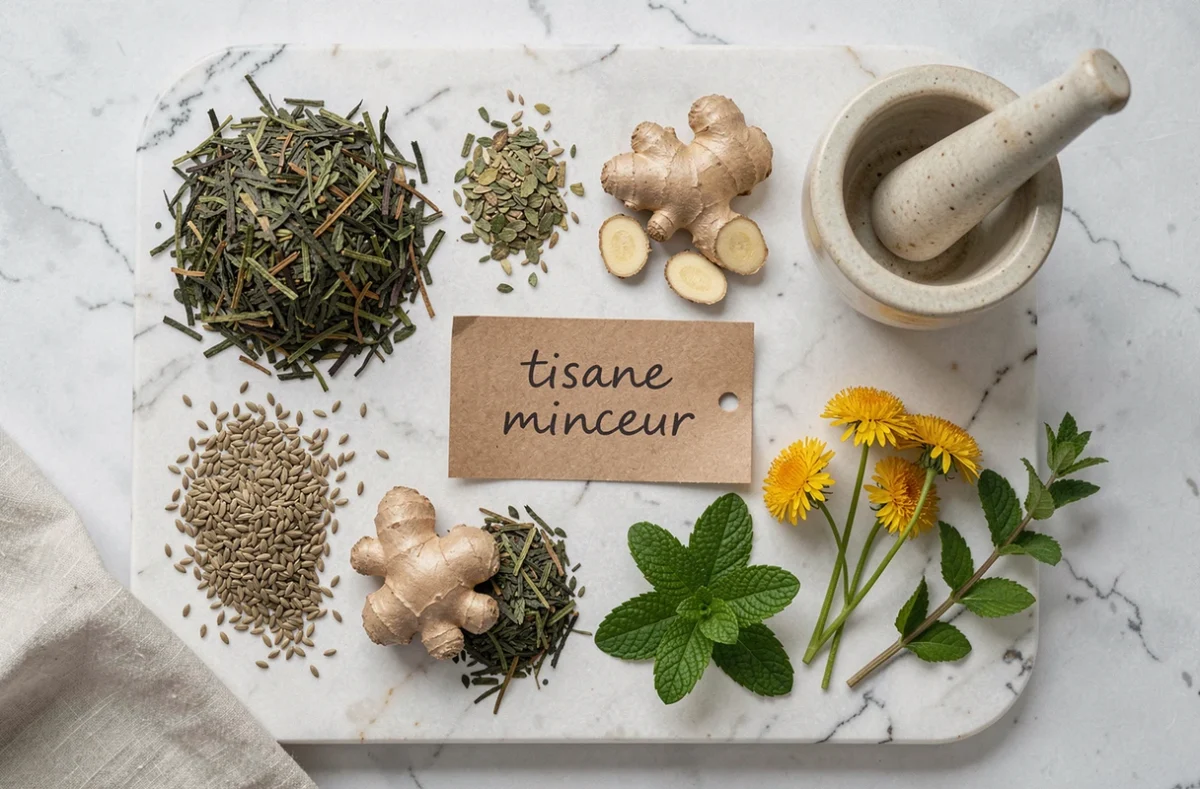
Draining plants, appetite suppressants, thermogenic: what infusions can really do
The plants used in weight loss herbal teas act through different mechanisms. None melt fat on their own, but some can support an overall process when combined with a balanced diet and regular physical activity.
- Draining plants (meadowsweet, cherry stalk, hawkweed) promote renal elimination of water. They act on water retention and feelings of bloating, not directly on fat mass.
- So-called thermogenic plants (green tea, mate) can slightly stimulate metabolism. The effect remains modest within the framework of a classic infusion, far from the marketing promises of certain packages.
- Appetite-regulating plants (konjac as a supplement, but also certain infusions of fennel or peppermint) help limit cravings between meals, partly due to a mechanical filling effect or an action on digestion.
- Digestive plants (green anise, lemon balm, verbena) reduce bloating and improve intestinal comfort, resulting in a less bloated stomach without actual weight loss.
A natural weight loss herbal tea acts as a complement, never as a replacement for dietary rebalancing. The available data do not allow for concluding that an infusion alone causes measurable weight loss over time.
Concrete criteria for choosing a natural weight loss herbal tea
Rather than relying on claims written on boxes, a few practical criteria can help sort through the available products.
Readable and short composition
Favor herbal teas whose ingredient list is limited to identifiable plants. A blend of three to five dried plants is easier to evaluate than a formula with twelve standardized extracts. Added flavors often mask the poor quality of the base plants.
Origin and cultivation method
Plants from Provence or European organic supply chains offer more reliable traceability than blends imported without indication of origin. The mention “organic farming” guarantees at least the absence of synthetic pesticides, a relevant criterion for a product consumed daily.
Galenic form suitable for use
For daily weight loss use, loose or bagged leaves or flowers remain the safest form. Concentrated extract capsules fall under a different logic and require medical advice, especially in cases of ongoing treatment or liver fragility.

Weight loss herbal tea and weight loss: limits to know before purchasing
Field reports vary on the actual effectiveness of herbal teas in a weight loss approach. Some people report better digestive comfort and reduced snacking, while others see no measurable effect on the scale.
The main limit lies in the mechanism of action: an infusion of draining plants promotes water elimination, which can result in a temporary drop in weight without fat loss. Confusing the two leads to quick disappointments.
The dietary context matters more than the choice of plant. Drinking three cups of draining herbal tea a day while maintaining a caloric surplus will yield no results. The infusion does not compensate for a dietary imbalance.
Last point of caution: weight loss herbal tea recipes found online sometimes combine plants with poorly documented interactions or recommend prolonged cure durations without follow-up. In case of doubt, a pharmacist or healthcare professional remains the best contact to adapt the choice of plants to one’s personal situation.